Problem-Solving
How to Pack Your Kitchen Like a Pro (Fewer Broken Dishes)
Bedrooms and closets are mostly soft goods that survive a bumpy ride just fine. The kitchen is different: it's dense, heavy, and full of fragile items packed close together, which is exactly the combination that leads to broken dishes and cracked glassware. Packing it well takes a bit more technique than tossing plates into a box, but the method professional packers use isn't complicated once you know it.
Gather the Right Supplies First
Before you wrap a single plate, get the right materials on hand. Using the wrong supplies is the single biggest reason kitchen boxes arrive with broken contents.
- Dish barrel boxes (thicker, double-walled boxes made for dishware)
- Plain packing paper, not newspaper, which can leave ink residue on dishes
- Bubble wrap for stemware and anything oddly shaped
- Cell divider kits for glasses and stemware
- Packing tape and a marker for labeling
Small and medium boxes work better than large ones for anything heavy, since a large box packed full of plates or canned goods quickly becomes too heavy to lift safely. Save your bigger boxes for lightweight items like pot lids, plastic containers, and dish towels.
The Right Way to Pack Dishes
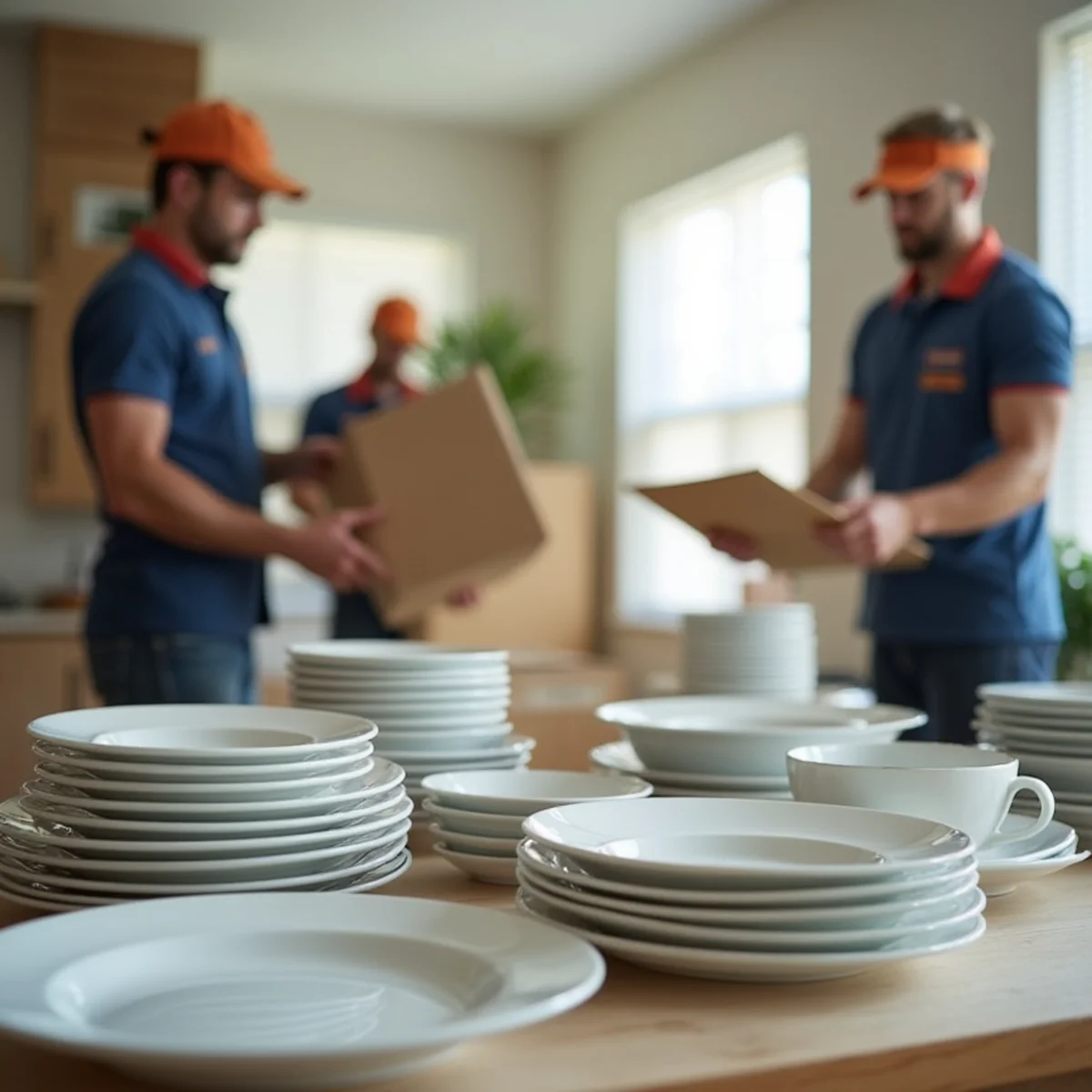
Wrap each plate individually in packing paper, then stack wrapped plates on their edge inside the box, like records in a crate, rather than flat in a stack. Plates packed on edge distribute impact across the rim rather than the flat center, which is where most breaks happen when plates are stacked flat and something shifts during transit.
Line the bottom of the box with crumpled paper for cushioning, and fill any gaps at the top and sides so nothing can shift once the box is sealed and moving.
Avoid mixing plates of different sizes and weights in the same stack, since a heavier serving platter on top of lighter salad plates can crack them under its own weight during a long drive. Group similar-sized dishes together and pack heavier serving pieces in their own smaller box instead.
Packing Glasses, Stemware & Fragile Items
Glasses and stemware benefit from cell divider kits, which keep each piece separated and prevent glass-on-glass contact. Twist a sheet of packing paper into a loose rope shape and wrap it around the neck and rim of stemware, since that's the most fragile point. Bowls can be packed similarly to plates, nested with paper between each one and placed on edge when the shape allows it.
If you don't have cell dividers on hand, individually wrapping each glass and packing them upright with paper padding between every layer is a reasonable substitute, though cell kits are worth the small extra cost for anything particularly fragile or valuable, like crystal or wine glasses.
Small Appliances, Pantry Items & Knives
Unplug and thoroughly dry small appliances like blenders and coffee makers before packing, and tape cords together so they don't tangle or catch on other items. For pantry items, use smaller boxes and don't exceed a comfortable lifting weight, since canned goods and jars add up fast. Wrap knives individually in thick packing paper or cardboard sleeves, taped securely, and label the box clearly so nobody reaches in blindly during unpacking.
Pack cooking oils, vinegars, and other liquids in a separate box lined with a garbage bag, standing upright with lids taped shut, in case anything leaks during transport. This keeps a spill contained to one box instead of soaking through everything else nearby.
Labeling and Loading Order
Label every kitchen box with both its destination room and a note that it's fragile, and keep boxes under 30 to 40 pounds so they're safe to lift without strain. When loading the truck, kitchen boxes generally load well toward the back for easy first access at the new home, since it's usually one of the first rooms people want functional again.
Keeping a simple running inventory list, even just a notebook page noting which numbered box holds what, makes unpacking far less stressful and helps you notice quickly if anything is missing after the move.
When to Let the Pros Pack for You
If the idea of wrapping an entire kitchen's worth of dishes sounds like more time than you have, professional packing services exist for exactly this reason. Trained packers move through a kitchen far faster than most homeowners can, using the same techniques above with materials already on hand, which often reduces breakage and insurance claims significantly. It's a popular add-on for households across Pembroke Pines who want the rest of the move handled without spending a full weekend wrapping glassware.
What Valuation Coverage Means for a Broken Dish
Even with careful wrapping, something occasionally cracks in transit, so it helps to understand how a mover's coverage actually works before assuming everything is protected the same way homeowners insurance protects a house. The federally required default, released value protection, doesn't pay based on what an item is actually worth. It pays $0.60 per pound per item. A two-pound serving bowl that cost $60 would only be covered for about $1.20 if it shatters, since the payout is tied to weight, not the price tag or sentimental value.
If your kitchen includes inherited china, a full set of crystal stemware, or small appliances you'd genuinely hate to replace, ask your moving company about full-value protection before moving day arrives. It costs more upfront, but it covers repair, replacement, or a cash settlement based on real market value instead of a few dollars per pound. It's also a good reason to keep receipts or a rough valuation for anything unusually expensive sitting in your cabinets.
Expert Insight: What Our Crews Wish Every Customer Knew
After packing thousands of kitchens across Broward, Miami-Dade, and Palm Beach County, our crews see the same avoidable mistakes over and over. The biggest one is procrastination: kitchens take longer than people expect, and rushing through the last few cabinets the night before is where breakage rates spike. Starting the kitchen two to three days ahead of the rest of the house, even packing just one cabinet a night, produces noticeably better results than a single marathon session.
The second most common mistake is under-labeling. A box marked simply "kitchen" tells the unloading crew nothing about what's inside or how carefully to handle it. Labeling each box with both contents and fragility level, for example "dish barrel - fragile - dinner plates," means movers naturally place it where it belongs and handle it with the right amount of care, rather than treating every box the same way.
Finally, don't underestimate how much heavier a fully packed kitchen box gets compared to what it looks like empty. Canned goods, small appliances, and stacked dishware add up fast, and a box that's too heavy to lift safely slows the entire crew down and increases the odds of a drop. When in doubt, use a smaller box and pack one item category lighter than you think you need to.
Pack Smarter, Not Harder
Whether you pack your own kitchen using these techniques or hand it off to professionals, Let's Go Moving is ready to help with the rest of your residential move. Our licensed, insured, bilingual crews handle packing, loading, and everything in between. Call (213) 691-0609 for a free estimate.
Frequently Asked Questions
Wrap each plate individually and stack them on their edge in a dish barrel box rather than flat, which distributes impact across the rim instead of the center.
Use plain packing paper. Newspaper ink can transfer onto dishes and glassware, requiring extra cleaning once you unpack.
Aim to keep any box, especially ones with canned goods or dishware, under 30 to 40 pounds so it stays safe and comfortable to carry.
Many people find it worthwhile, since the kitchen is the most time-consuming and breakage-prone room, and professional packers typically work much faster with lower breakage rates.
Planning a Move in South Florida?
Get a free, honest estimate from a licensed, insured, bilingual local mover.
Mon–Fri 7am–7pm · Sat 8am–6pm · Sun 8am–5pm · Same-day & after-hours moves available by request